
Product Designer and Design Engineer — end to end
DC Medical Aesthetics
The panel that runs a clinic from the secretary's phone. No procedure starts until it's paid for.
The product
A voice note, typed here for the recording, fills in a new patient's form and opens her case. Demo data; fixed rules stand in for the AI.
- / Role
- Product Designer and Design Engineer — end to end
- / Duration
- Live since Sep 21, 2026 — still shipping
- / Team
- Solo — product, design, code
- / Year
- 2026
The impact
Finding what a patient owed used to take ten minutes of opening files; now every case shows it beside the next step.
Context
The aesthetic-medicine clinic I co-own in Barranquilla ran on WhatsApp, Google Calendar and a shared Drive: everything written down, nothing connected. I built one panel on top of those tools, not instead of them.
What I did
- 01
Three locked phases — valuation, payment, procedure; the procedure's green light needs full payment, receipt and signed consent.
- 02
Safe rollout — a read-only version on day one; editing came later, behind per-person logins, after a security audit.
- 03
Rules as tested functions — balances, card fees, dates and name matching, covered by 12 test suites.
In detail
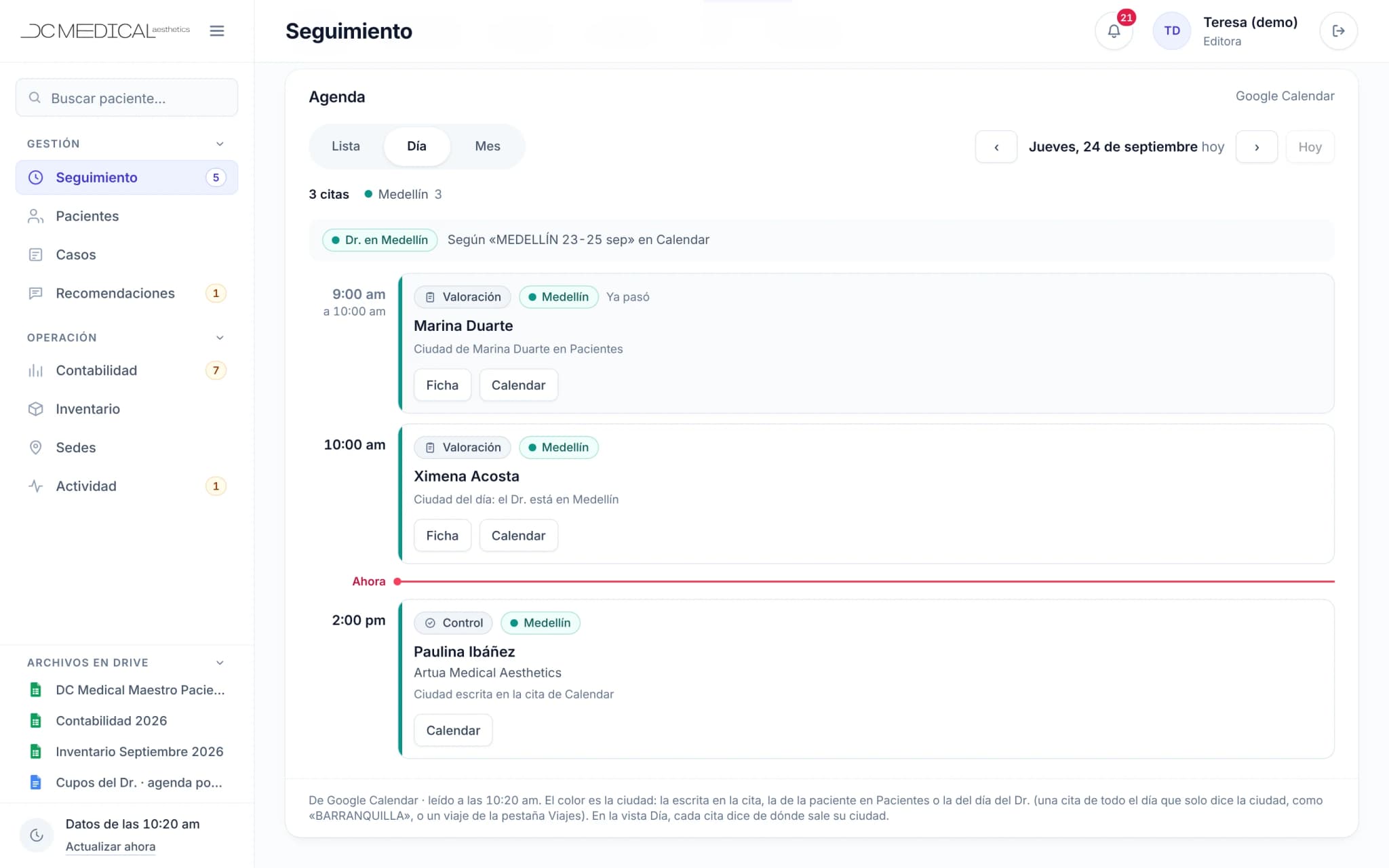
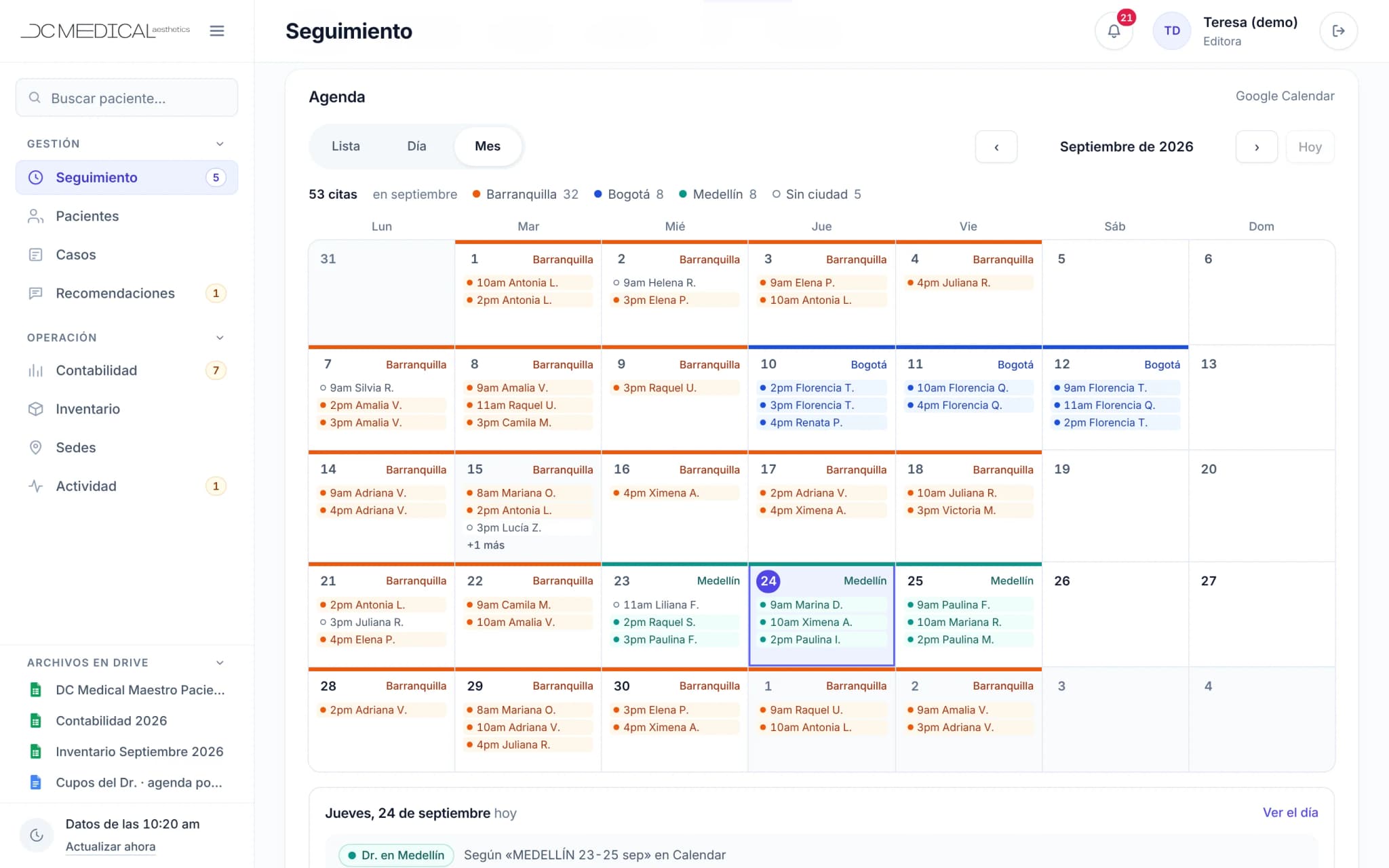
02One day by the hour, and the city the doctor is in. 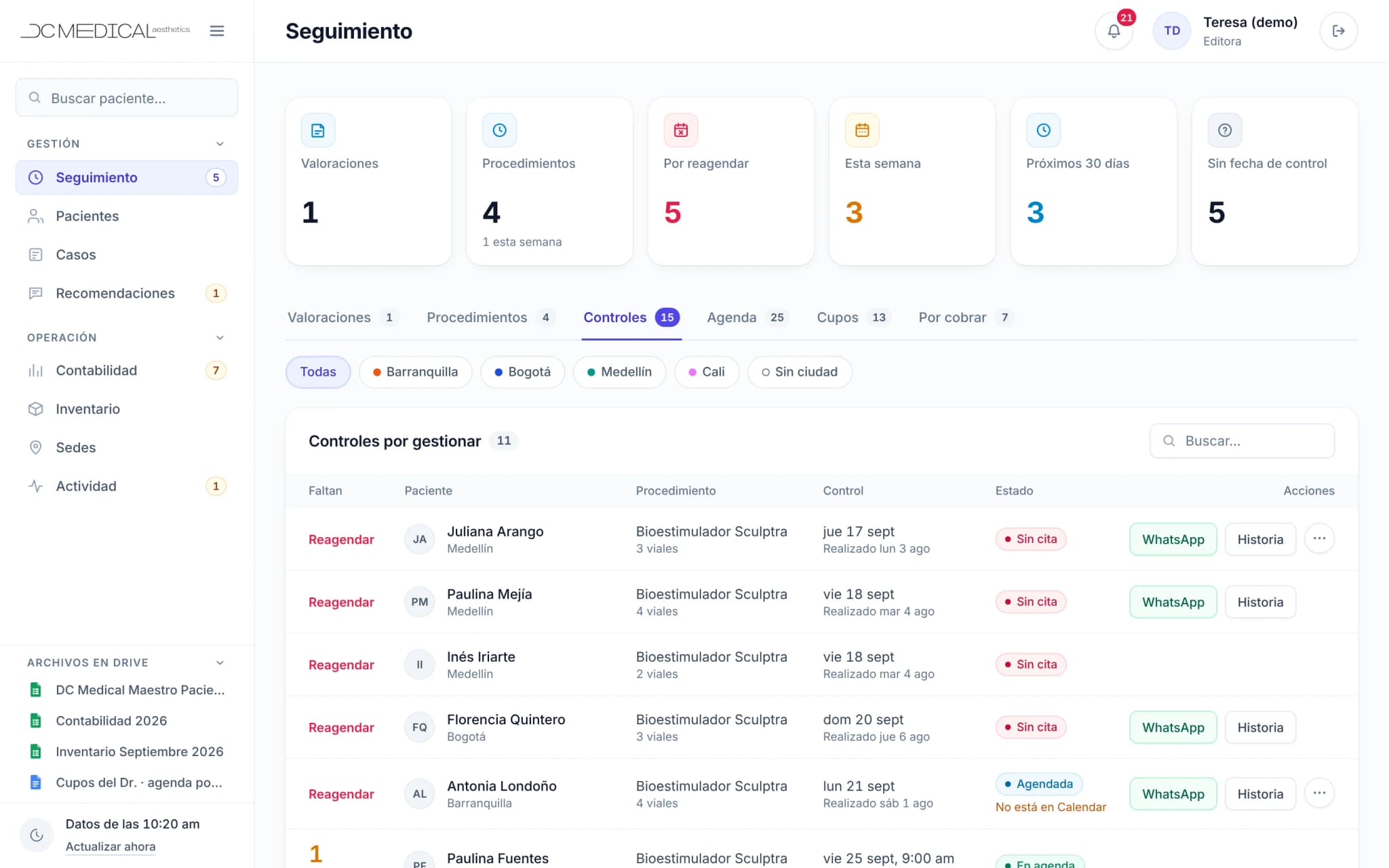
03Follow-up, counted: who's due, who has no date yet, who slipped. 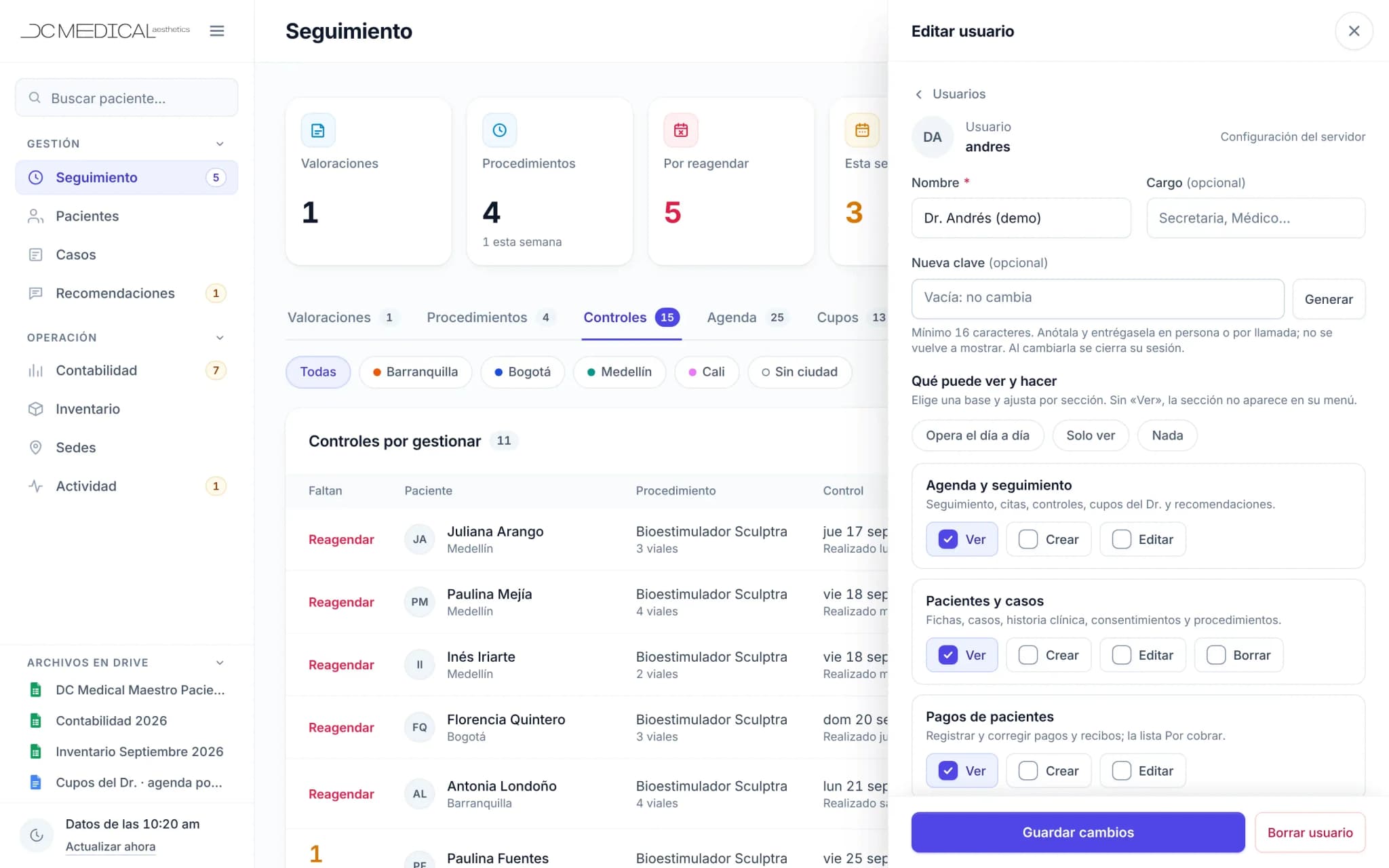
04Permissions by area: the doctor reads, the secretary runs the day.
What it can do
One board with the clinic's day on it, on a laptop at the front desk or a phone in a car.
- AI
A voice note that fills the form
Say who came, for what, and what she paid. The model fills the form and saves nothing until a person checks it.
- Product
Phases with locks
Each phase lists what's missing and links to the form that clears it. The footer always names the next step.
- Product
The doctor's slots, ready to send
The document the secretary already keeps becomes a week of red and green slots, flags days in two cities, and copies into WhatsApp.
- AI
Receipts and invoices read by AI
Photograph a receipt, a supplier invoice or travel expenses: the values come back filled in for review, then land in inventory or the month's accounting.
How it happened
- 01
The plan was attacked first
I mapped how the clinic actually worked, then put the plan through an adversarial review on data, security and feasibility. It found the traps the sheets hide; only the third version reached code.
- 02
Read first, write later
Version one was a read-only Claude artifact, safe to put in front of the clinic on day one. Editing came later, behind a login per person, after a security audit; live since September 21.
- 03
The phone rewrote the interface
The secretary runs the clinic from an iPhone, often from the car. So the panel installs as an app, tables become cards, tap targets are at least 44 pixels, and a voice note fills the new-patient form.
- 04
Real money, then real requests
Real payments set rules no plan had: a credit card lands at 95%, because the clinic passes the fee on to the patient. Then the clinic started asking: slots, an agenda by city, permissions. Most shipped within a day.
Key decisions
The spreadsheet stays the source of truth
A real database was the obvious build. But the person who keeps the books works in Drive every day, and the clinic shouldn't depend on me. Switch the panel off tomorrow and nothing is lost.
Balances are read, not summed
Each income row carries the balance left after that payment, so summing counts a debt again with every deposit. An early version reported a phantom thirty-eight million pesos. Now the latest row wins.
A color per city, never on its own
The doctor works in three cities: orange for Barranquilla, blue for Bogotá, teal for Medellín, checked for color blindness. The name always sits beside its dot, so nobody has to tell teal from blue.
- Product Strategy
- HTML & Vanilla JS
- Tailwind CSS
- Cloudflare Workers
- Google Apps Script
- Google Drive & Calendar
- Claude (API & MCP)
- PWA
- Playwright
- node --test
I co-own the clinic with the doctor and built the panel end to end. He owns the medical protocol; the secretary's daily use shaped the flows. Screens and walkthrough use seeded demo data: no real patient, no clinic figure.